Jordan Zietz is eager to set the record straight from the start: he has never forced anyone to permanently ink his startup’s logo on their body, and he never will.
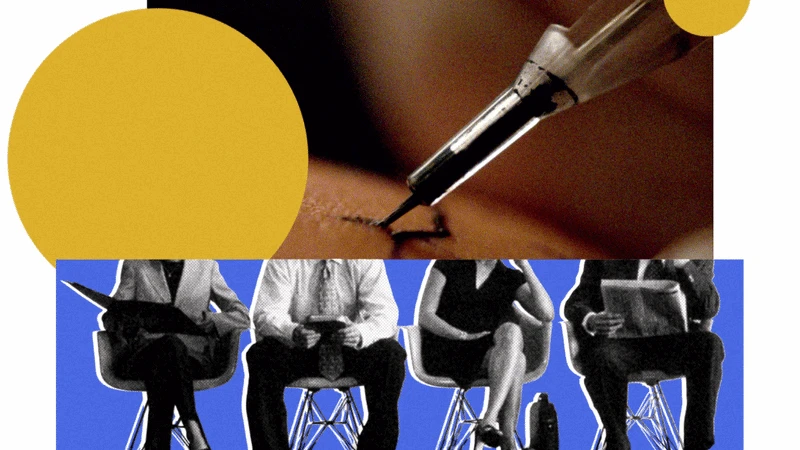
The 24-year-old founder briefly became one of the most vilified people on the internet in late July, after his small-business AI startup LemonLime hosted an after-party for Y Combinator’s Startup School. In an original LinkedIn post, Zietz shared that he’d brought a working tattoo artist to the event, and promised an immediate on-site interview to anyone who got a LemonLime tattoo. Seven guests left the party with new ink, he added.
Public backlash arrived almost instantly. Zietz’s post was flooded with furious comments calling him “disgusting” and “unreasonably unfair,” labeling the stunt a textbook example of predatory corporate behavior: a blatant abuse of power and a clear violation of professional ethics. A screenshot of the post quickly went viral on X, with one widely-shared comment summing up widespread frustration: “The job market cannot be this broken that young people have to get permanent tattoos just to get an interview.”
In a Tuesday interview with WIRED, Zietz pushed back against the dominant narrative, correcting the misleading framing of his original post. He says no one at the party actually got the official full LemonLime corporate logo permanently tattooed on their body. While pre-made designs of lemons and limes were available, attendees were allowed to pick any design they wanted. At least one guest got a fully personal tattoo unrelated to the brand, and she has said she was not even searching for a job at the startup.
According to Zietz, he explicitly told every attendee that getting a tattoo—citrus-themed or otherwise—was never a requirement to land an interview. In fact, he claims every guest who requested an interview received one, regardless of whether they got inked. “A good number of people who got tattoos never even wanted to take us up on the interview offer,” Zietz explained. “They just came for a free tattoo.”
Three of LemonLime’s five employees got small LemonLime-themed flash tattoos at the party, including Zietz and his co-founder Daniela Muñoz. At least one non-employee guest also got inked, per Zietz’s account. Earlier this month, Zietz got his own second tattoo in less than a month: the actual official LemonLime logo, inked on his opposite shoulder. Tattoos are nothing new for Zietz: he got his first ever tattoo on a first date, and his thigh features a doodle of a dinosaur plus a text tattoo that reads “This Is The Correct Knee” with an X marked underneath.
“I would never ask anyone to do something I wouldn’t do myself,” Zietz said, repeating again that as far as he knows, he is the only person with the full LemonLime logo permanently tattooed on his body. He plans to post a polished video of his tattoo session to social media soon.
Though Zietz insists tattoos were never a prerequisite for a job at his startup, the widespread misunderstanding was totally reasonable: the wording of his original LinkedIn post absolutely led readers to assume a link between ink and interviews. After reading through the wave of critical reactions, Zietz says he understands why people were uncomfortable with the inherent power dynamic at play.
Still, Zietz defends the decision to bring a tattoo artist to the party, framing it as an unconventional way to filter for candidates that fit LemonLime’s one-of-a-kind company culture. He says his original viral post was half playful, half earnest, designed as an informal test of cultural alignment. He never wanted anyone to feel pressured to get a tattoo, but he wanted guests to see the tattoo station and react honestly to the startup’s offbeat vibe. If a partygoer was turned off by the idea, that signals they probably would not be a good fit for the team anyway, he argues.
The approach aligns with Zietz’s public persona: he openly prioritizes hiring people who match his famously eccentric approach to life. Back when he was an undergraduate at Stanford, he was suspended from his role as the university’s mascot, the Stanford Tree, after unfurling a banner that read “Stanford Hates Fun” during a football game. Before launching LemonLime, Zietz co-founded a social media platform called Confetti, and as he shared on LinkedIn last year, part of that company’s hiring process involved conducting interviews while skydiving.
“I get hundreds of applications for open roles at LemonLime every single day, and 80 to 90 percent of them are the same generic, overly polished pitch: here’s my resume, I’m the most professional candidate you’ll ever meet,” Zietz said. “And it’s immediately clear to me that those people don’t belong at LemonLime.”
“Nothing matters more to me than this team’s culture,” he added. “The most important question for us, always, is this: are we going to enjoy being around this person 18 hours a day, seven days a week?”
“There’s something really genuine about that level of openness and commitment,” he said of the unorthodox hiring filter.
The Job-Interview Tattoo Guy Everyone Got Mad at Finally Explains Himself