Viral Street Robots Roaming the Globe Are All One Affordable Chinese Humanoid Model
When Edward Warchocki chats with you, he comes off as just an ordinary person. “Not some super genius, but incredibly warm and expressive, and it’s so easy to hit it off with him,” says Bartosz Idzik, the creator behind the bot. But when Edward falls silent, it’s harder to overlook his true identity: a 4-foot-tall humanoid robot roaming the streets of Poland.
Six months ago, Idzik and his friend Radosław Grzelaczyk got the idea to import a humanoid robot from China. They named him Edward Warchocki—drawing from Grzelaczyk’s pet dog Eddie, the Polish verb for growling “warczeć,” and the fact that the name sounds perfectly natural for a local Pole. In their first few days taking Edward out in public, he couldn’t speak, and passersby were visibly unnerved by the mysterious, silent figure.
Idzik, a software developer, later wired Edward to a large language model that let him hold real-time conversations in Polish. “Once he started talking, people fell in love with him. Before that, he was just a 40-kilogram hunk of metal,” Idzik says. It didn’t take long for Edward to amass a huge global fanbase. He’s toured the Polish parliament and chatted with lawmakers, hiked mountain trails, waded into lakes, and even had a playful “arrest” from local police. Back in April, a clip of Edward—decked out with a backpack and a Rolex—chasing off wild boar on the streets of Warsaw blew up internationally. Today, Edward counts more than 1 million followers across social platforms, with his videos racking up a combined 4 billion views.
By 2026, you’ve almost certainly scrolled past content from one of these viral humanoid influencers popping up across the world. There’s Rizzbot, the cowboy-hat-clad robot that flirts with pedestrians on the streets of Austin, Texas; Bart Robot, who broke it down with New York Knicks fans after the team’s historic championship win; and Brickell Clanker, who switched between national jerseys to party with World Cup fans after every match. But what most viewers miss is that all of these viral bots are the exact same model: the Unitree G1, one of the most accessible, low-cost humanoid robots on the global market today, built by a Chinese firm leading the global robotics race.
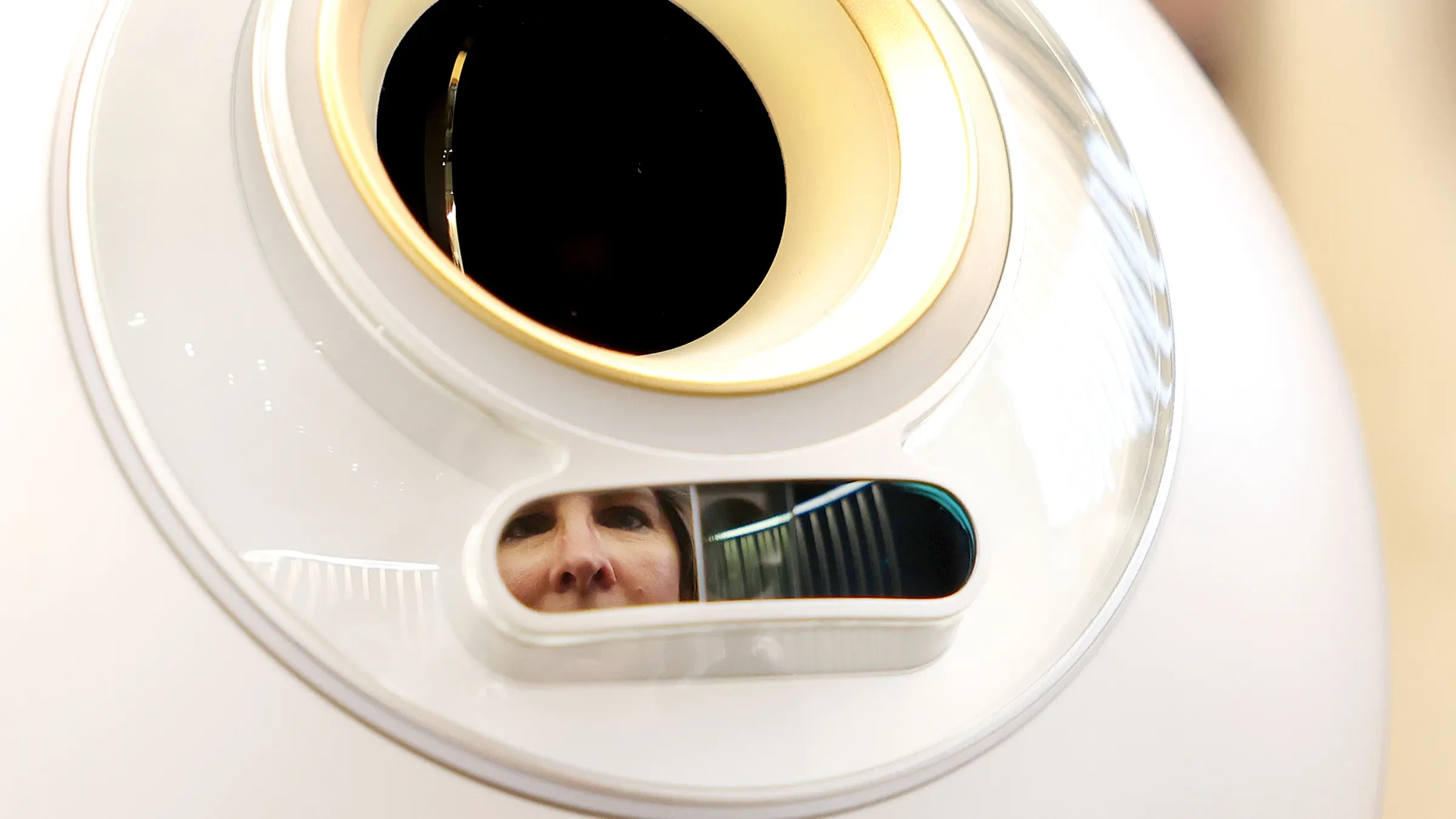
The G1 is roughly child-sized, with a hollow facial frame ringed by soft blue light and lightweight pale gray aluminum limbs. It’s done everything from competing on America’s Got Talent to showing off kung fu, sparring in boxing matches, nailing parkour, dancing at concerts, jogging with kids, attempting (and failing) to cook, streaming with top creator Kai Cenat, panhandling for tips, even “dating” itself, getting ordained as a monk in Japan and South Korea, and praying at a mosque in Dubai. One anonymous X creator summed up the viral vibe perfectly: “This clanker is lit as fuck!”
Unitree’s Unprecedented Commercial Success
Unitree is set to go public on the Chinese stock market in just two weeks, and its financial filings lay bare just how popular its products have become. Unlike most robotics firms, whose products remain locked in lab testing, more than half of Unitree’s 2025 revenue came from delivering humanoid robots to actual end customers. The company shipped 5,511 humanoids last year, with an average price tag of under $25,000 per unit, and 43% of all sales went to customers outside China. Last year also marked the first time the company turned a full profit.
“We tested tons of humanoid robots, and the G1 was the best for what we use it for,” Idzik says. “People are used to thinking China just copies other countries, but when it comes to affordable, accessible humanoids, other countries should be copying China right now.”
Even with this massive commercial win, Unitree and its robots still face sharp skepticism. Critics acknowledge the bots are great at grabbing viral clout and entertaining crowds, but question whether they can ever hold traditional, economy-contributing jobs like working assembly lines or cleaning homes. The question many are asking: When will the Unitree G1 get a “real” job?
Buying a G1 Influencer in the U.S.
Twenty-four-year-old Jake Cooperstein, who lives in Miami, says he got the idea to launch his own humanoid influencer after seeing Edward and other viral G1 accounts online. Back in January, he visited a robotics retailer’s warehouse in New York to test out the Unitree G1, and walked away blown away by how simple it was to operate. He put down a deposit and locked in his order the very next day.
On Unitree’s official website, a base-model G1 retails for $13,500—but that price doesn’t include tariffs, shipping, or taxes. U.S. distributors list the robot for roughly $19,000 as a result. That didn’t work for Cooperstein, though. The entry-level version doesn’t come with advanced upgrades like dextrous gripper hands, and it bans customer modifications. Instead, he opted for the U5 variant built for educational researchers, which comes with more compatible parts and full customization options, for a total price of $66,000.
Cooperstein named his bot the Brickell Clanker, after Miami’s downtown Brickell neighborhood, and started taking it out to interact with the public. The Brickell Clanker got its big break this summer, popping up at World Cup post-match afterparties and switching between jerseys for Argentina, Brazil, and the U.S. to match crowd energy. Today, Cooperstein earns most of his income by booking the Brickell Clanker for influencer parties, nightclubs, and corporate events, charging between $800 and $1,200 an hour depending on what the robot is asked to do.
He recently added a second Unitree robot to his fleet: the Unitree R1, which costs roughly one-third the base price of the G1. Faster and lighter than the G1, the R1 is Unitree’s latest push to make humanoid robots even more affordable for casual users. Cooperstein named his new bot Lil Clanker.
But the future of adding more Unitree robots to his fleet is far from certain. Back in July, the U.S. Federal Communications Commission announced a ban on new imports of Chinese-made humanoid robots. Existing models that already cleared regulatory approval—like the G1 and R1—are technically still allowed in the country, but long-term rules remain unclear. What is certain is that when Unitree launches its next generation of humanoid robots, it will not be able to sell them to U.S. customers. Unitree did not respond to requests for comment on the ban.
Persistent Physical Limitations
Across the Atlantic, Edward Warchocki faces far fewer regulatory threats. Idzik says MERA Robotics, the company he co-founded with Grzelaczyk, now operates a fleet of 20 humanoid robots, most of them Unitree G1s. Every robot operating in Poland shares Edward’s signature personality, but the company also runs bots under different influencer brands in the Middle East and Southeast Asia.
While large language models let the robots hold open-ended conversations with strangers, their physical capabilities still face major limitations. Both Idzik and Cooperstein say that when they take their robots out in public today, they are manually teleoperating the bots most of the time. While the G1 is technically capable of autonomous navigation in real-world environments, both owners say they worry a technical malfunction could injure a bystander and create a major safety incident.
The G1 Cooperstein purchased comes preloaded with around 20 pre-programmed gestures and 15 dance moves. Adding new movements requires advanced technical know-how. For example, he had to manually code the Brickell Clanker to replicate the viral “Viking Row” gesture popularized by Norwegian soccer fans at this year’s World Cup.
Cooperstein still recalls his first day bringing the Brickell Clanker to the World Cup fan festival: Hundreds of people, including reporters, crowded around the robot and cheered as it danced. “No one knows it’s me controlling it. I just blend into the crowd, stand back, and watch everyone react,” he says. “And all I can think is, ‘Holy shit, this is the future.’”
This is an edition of Made in China, the newsletter by Zeyi Yang and Louise Matsakis. Read previous newsletters here.
Viral Street Robots Roaming the Globe Are All One Affordable Chinese Humanoid Model