AI Boom Turns Inner Mongolia’s Grasslands Into One of Asia’s Fastest-Growing Computing Hubs
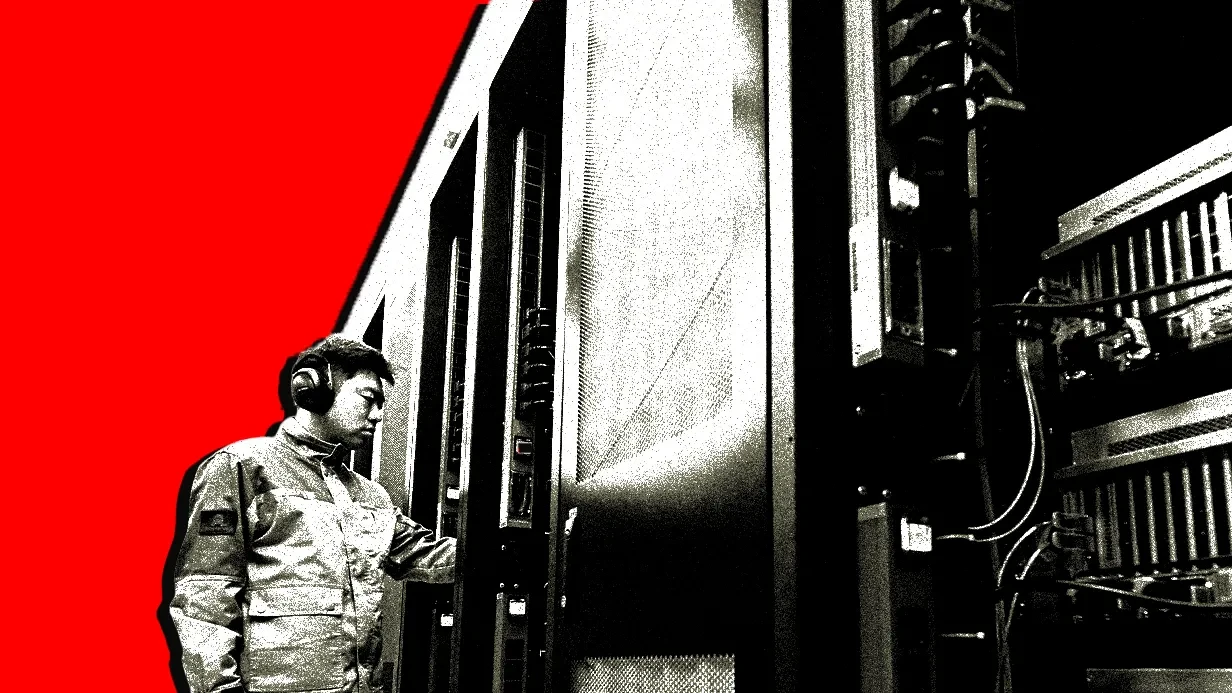
Just a two-hour train ride west of Beijing, you’ll find yourself immersed in the rolling grasslands and ancient cinder cones of Inner Mongolia. For decades, this vast, arid expanse has been best known as China’s heartland for sheep farming and coal mining—but in recent years, it has emerged as the country’s hottest destination for building AI data centers.
In Ulanqab, a mid-sized Inner Mongolian city home to roughly 1.5 million people, nearly 100 data centers have launched operations or broken ground since 2016. According to a recent research note from Goldman Sachs, Chinese companies have committed to building projects here with a combined total estimated capacity of 12.5 gigawatts. More than 70% of these total commitments were announced just in the last year, making Ulanqab one of the fastest-growing compute clusters in Asia. For context, OpenAI’s high-profile $500 billion Stargate Project is only projected to reach a total capacity of 10 gigawatts when fully completed.
Chinese firms are flocking to Ulanqab for a handful of key advantages. Perched at high elevation on the Inner Mongolian Plateau, the region sees long, cold winters, which means local data centers need far less energy to keep server hardware cool. It is also located relatively close to Beijing, allowing data to transmit to China’s most populous regions with minimal latency. But the most enticing draw is cost: electricity in Inner Mongolia is cheaper than almost anywhere else in China, powered by both rapid growth in wind and solar energy and the region’s abundant domestic coal supplies.
What makes this boom particularly notable is who is building these facilities. For the first time, Chinese AI companies are pouring major investment into their own proprietary infrastructure, rather than renting computing power from third-party cloud providers. DeepSeek is reportedly building a massive AI-focused data center in Ulanqab, alongside other major tech players including ByteDance, Alibaba, and Xiaohongshu. For years, Chinese AI firms spent far less on physical infrastructure than their American peers, even as they developed a range of popular AI models with impressive capabilities. The Ulanqab boom signals that this gap is finally starting to close.
There is just one major catch: a critical shortage of water. Ulanqab is just as dry as Denver, Colorado, receiving only roughly 14 inches of rainfall per year. Even before most planned data center projects come online, the local government is already struggling to meet water demand from existing residents. Last month, Ulanqab’s local water utility was forced to shut down several water treatment plants for seven hours each night to curb peak usage. While Ulanqab’s data centers need far less water in the winter—local government weather data shows they only require additional water for cooling during two months of the year—the wave of new infrastructure still poses a significant environmental challenge for the region.
A Hub Reborn For The AI Age
Inner Mongolia has been a data center hot spot for at least a decade, long before the current AI boom. Huawei built its first Ulanqab data center in 2016, and Apple followed with its own facility three years later. In 2021, the area was designated a core hub for China’s national government initiative “Eastern Data, Western Compute,” a program that aims to shift large-scale data center development to China’s western interior.
For years, these western hubs faced one major downside: their distance from China’s densely populated eastern coast meant they originally suffered from high latency when delivering data to most users. As a result, they were largely relegated to backup storage—until AI gave them an entirely new purpose.
“With the rise of AI in 2022, the industry realized these remote data centers could actually be well-utilized for model training,” says Andrew Stokols, a professor at Singapore Management University who studies China’s compute infrastructure. AI model training runs can take months and do not require constant real-time adjustments, so latency is far less of a concern for this work.
Relatively speaking, Ulanqab is also not nearly as remote as other western Chinese data center hubs. It sits much closer to Beijing and other major Chinese metropolitan areas than alternative western locations, and two dedicated fiber-optic cables completed in 2017 and 2019 have cut average latency to less than five milliseconds—fast enough to support real-time data exchanges like AI inference.
Stokols notes that unlike many other Chinese data center hubs, Ulanqab’s growth has been driven more by commercial demand than government-led investment. As Chinese AI startups like DeepSeek, Moonshot AI, and Zhipu AI gain more paying domestic users, they have a clear business case for building inference data centers close enough to serve customers without excessive latency.
The Renewable Energy Promise (And Caveat)
The Chinese government has another key incentive to back data center development in Inner Mongolia: the facilities can help absorb the country’s excess renewable energy capacity. Damien Ma, director of Singapore-based research center Carnegie China, says there is a clear positive correlation between Chinese regions with the most unused renewable energy and regions that have built the most data centers.
In policymakers’ eyes, this is a win-win strategy: China can close the data center infrastructure gap with the U.S., while also boosting demand for its domestic renewable energy sector. It should come as no surprise, then, that this month Envision, one of China’s largest wind turbine manufacturers, announced it will build a 2-gigawatt AI data center in Ulanqab connected directly to the company’s own clean power supply.
But experts warn that framing AI data centers and Chinese renewable energy as a perfect match is an oversimplification. Stokols’ research found that roughly 37% of Ulanqab’s electricity still comes from coal. And because data centers need to operate 24/7, operators have traditionally favored fossil fuels for their consistent reliability.
“Inner Mongolia has long been the West Virginia of China. It’s coal country,” Ma says. The region is now racing to replace coal with wind and solar, but it remains unclear how fast that transition will happen or how complete it will be. For now, the data centers popping up across China’s remote northern highlands will still rely on coal to some extent. But “in three years, maybe it will be completely powered by renewables,” Ma says.
This is an edition of Made in China, the newsletter by Zeyi Yang and Louise Matsakis. Read previous newsletters here.
AI Boom Turns Inner Mongolia’s Grasslands Into One of Asia’s Fastest-Growing Computing Hubs