Interview: How Ati Robotics Built a (Mostly) China-Free Robot Supply Chain, and Why It’s Poised to Gain From New U.S. Import Bans
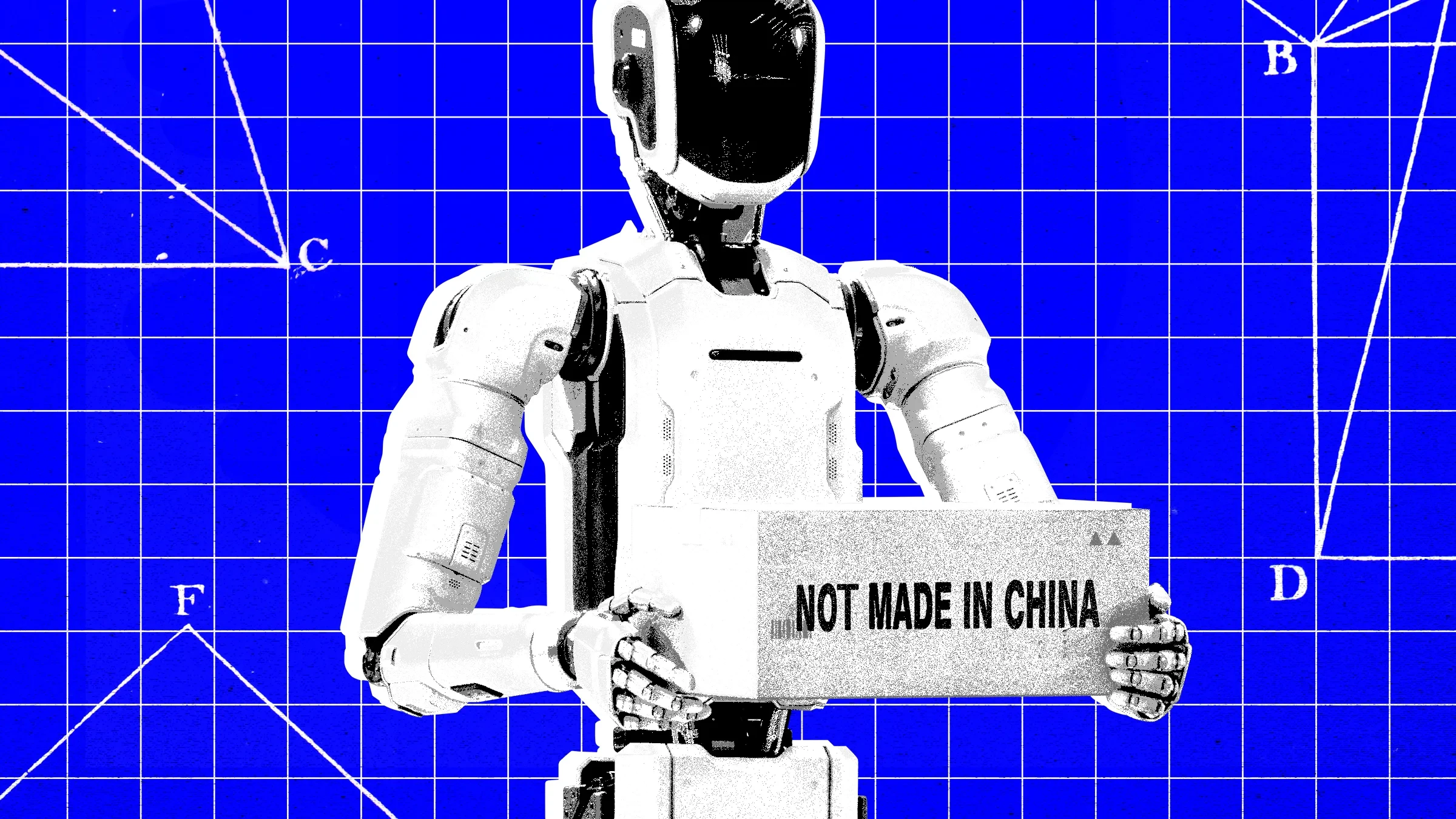
Last week, U.S. regulators rolled out a broad ban on imports of dozens of types of Chinese-built robots, citing widespread national security concerns. For Saurabh Chandra, CEO of Ati Robotics, the new rule created an immediate opportunity his company was already prepared to seize.
Ati Robotics assembles all of its robotic systems in India, and Chandra says the company relies on Chinese components far less than nearly any other robotics firm active in the U.S. market today.
Venture capital tracker PitchBook data shows investment in robotics startups has hit record highs this year, for both total deal count and total capital invested. But most of these funded startups focus primarily on software development, and still depend heavily on Chinese suppliers for critical hardware. The Federal Communications Commission’s ban, which covers new Chinese-made humanoid robots and other advanced robotic devices, is expected to slow growth for many small U.S. robotics firms. But Ati is one of a small set of companies that stand to benefit from the new restriction.
Founded in 2017, Ati originally developed motors for self-driving vehicles before shifting its focus to building its own line of industrial robots: tuggers and pallet movers designed to transport tons of bulk materials across large manufacturing and warehouse facilities. The company bet on building all of its own hardware in-house to deliver better performance, a move Chandra says most of his early advisors warned against. But that bet has naturally left the company far less dependent on Chinese supply chains, and it is now starting to pay off.
Today, Ati has hundreds of robots operating across customer warehouses and factories, with more than 50 total clients, Chandra says. The company’s first humanoid robot, built to move heavy storage bins around facilities, will launch into commercial service later this year.
Chandra spoke with WIRED last week about how Ati avoided overreliance on China while building robots that can still compete with top industry players on both price and performance. This interview has been edited for clarity and length.
WIRED: Developing custom in-house hardware is extremely expensive. How did you financially sustain that long-term work?
Saurabh Chandra: We keep all of our R&D operations based in Bangalore, which keeps our labor costs far lower than they would be if we ran all R&D in the U.S. Over the past few years, Bangalore has been at the center of India’s electric vehicle revolution for two- and three-wheeled vehicles. It turned out that the power profiles and component characteristics we need for robotics are almost identical to the parts being developed for that EV industry. We were able to leverage that already growing supply chain and existing component ecosystem.
Automotive parts are inherently built to be reliable and produced at massive scale, which makes them incredibly cost-effective for our use case. We did have to work closely with our vendors to re-engineer some of these parts to work properly in robots, but once that work was done, it was a huge win for our cost structure and supply chain resilience.
WIRED: One of your models is fully free of Chinese parts, but your other products aren’t. Can you explain the varying levels of what you call “supply chain resiliency” across your line?
Saurabh Chandra: Our two top-selling products, our 10,000-pound tugger and our standard pallet mover, use very few Chinese parts at all. These units move raw materials from storage to factory lines, or between different processing points across a facility. Even for our humanoid, the entire arm and all actuators are built here in Bangalore. That said, right now we do source harmonic drives from China, for example, and frameless motors, at least for the time being. Our battery cells also currently come from China, but we could switch those out for South Korean or Japanese cells tomorrow with no issue—those are easy passive components to replace.
There are a small number of components that do still come from China when you get down to the most basic parts, but because we use induction motors, even the magnets in our motors do not come from China. That’s a very different choice than what most other robotics developers make today.
WIRED: Which of your robots uses the fewest Chinese parts?
Saurabh Chandra: That’s our 10,000-pound tugger—it’s actually effectively fully China-free. Even our standard pallet mover only has less than 5% of its components sourced from China.
WIRED: What parts do you still source from China for those low-China models?
Saurabh Chandra: For the tugger, it’s only the battery cells. For the pallet mover, we use one high-quality solid-state lidar sensor that doesn’t have a viable non-Chinese alternative right now. But for the tugger, we use lidar from Ouster, which is a U.S.-based company.
WIRED: Did you have to make any trade-offs in cost or performance to avoid Chinese components?
Saurabh Chandra: Yeah, for example we use induction motors, which are slightly less efficient than the brushless motors with magnets that are commonly made in China. But you can easily trade a little bit of efficiency for a small increase in battery capacity, so it’s a very minor trade-off overall.
WIRED: How do you market your robots? Is your independent supply chain a core part of your sales pitch to customers?
Saurabh Chandra: To be honest, it hasn’t been a big part of our marketing so far, but we do make sure customers are aware of it. We haven’t seen it be an explicit top requirement for most buying decisions yet, but a lot of customers have definitely told us that it influences their final decision to work with us.
WIRED: How do you plan to reduce your reliance on Chinese parts for your new humanoid robot?
Saurabh Chandra: It’s still very early in development, so we don’t optimize the supply chain for China independence right out of the gate. Right now the gears we use for the humanoid come from China, but those same types of gears are already manufactured in Germany, Taiwan, and Japan. Those alternatives will be a little more expensive than the Chinese options we currently use, but viable alternatives are already available.
WIRED: With the new ban now in place, do you think it will be easy for most U.S. robotics companies to find alternative suppliers for Chinese parts?
Saurabh Chandra: The regulation doesn’t ban the use of any and all Chinese parts, full stop. But I do think a lot of companies are going to be significantly impacted by this. Most of these robotic technologies were actually invented in the U.S., so it’s a bit of a shame that we don’t manufacture them at scale here anymore. That said, this could encourage more companies to start building locally, which isn’t a bad thing long-term.
WIRED: Where will your humanoid robot ultimately be assembled?
Saurabh Chandra: Right now we manufacture all of our robots in Bangalore, but we’re setting up a new assembly facility in Madison Heights, near Detroit, Michigan, that will handle final assembly for all our North American-bound robots eventually.
WIRED: How are people in the broader robotics industry reacting to the new ban?
Saurabh Chandra: Most everyone is still in denial about how much this will change things. It’ll take a few months for the impact to become real for most firms. A couple of months ago I met with a lot of industry peers at a conference, and many were actively lobbying in Washington D.C. to stop a rule like this from going into effect, but I don’t think their efforts worked.
WIRED: Who do you think will ultimately benefit the most from the new ban?
Saurabh Chandra: Any company that builds robots outside of China, including robotics firms based in the U.S. and Europe. We’re kind of an accidental beneficiary here. Tesla’s Optimus humanoid program is obviously a clear beneficiary, and Figure, the U.S.-based humanoid startup, manufactures here in the U.S. so it will also gain. I just hope more companies get inspired to try this model—what we’re doing isn’t some sort of unachievable magic.
Interview: How Ati Robotics Built a (Mostly) China-Free Robot Supply Chain, and Why It’s Poised to Gain From New U.S. Import Bans