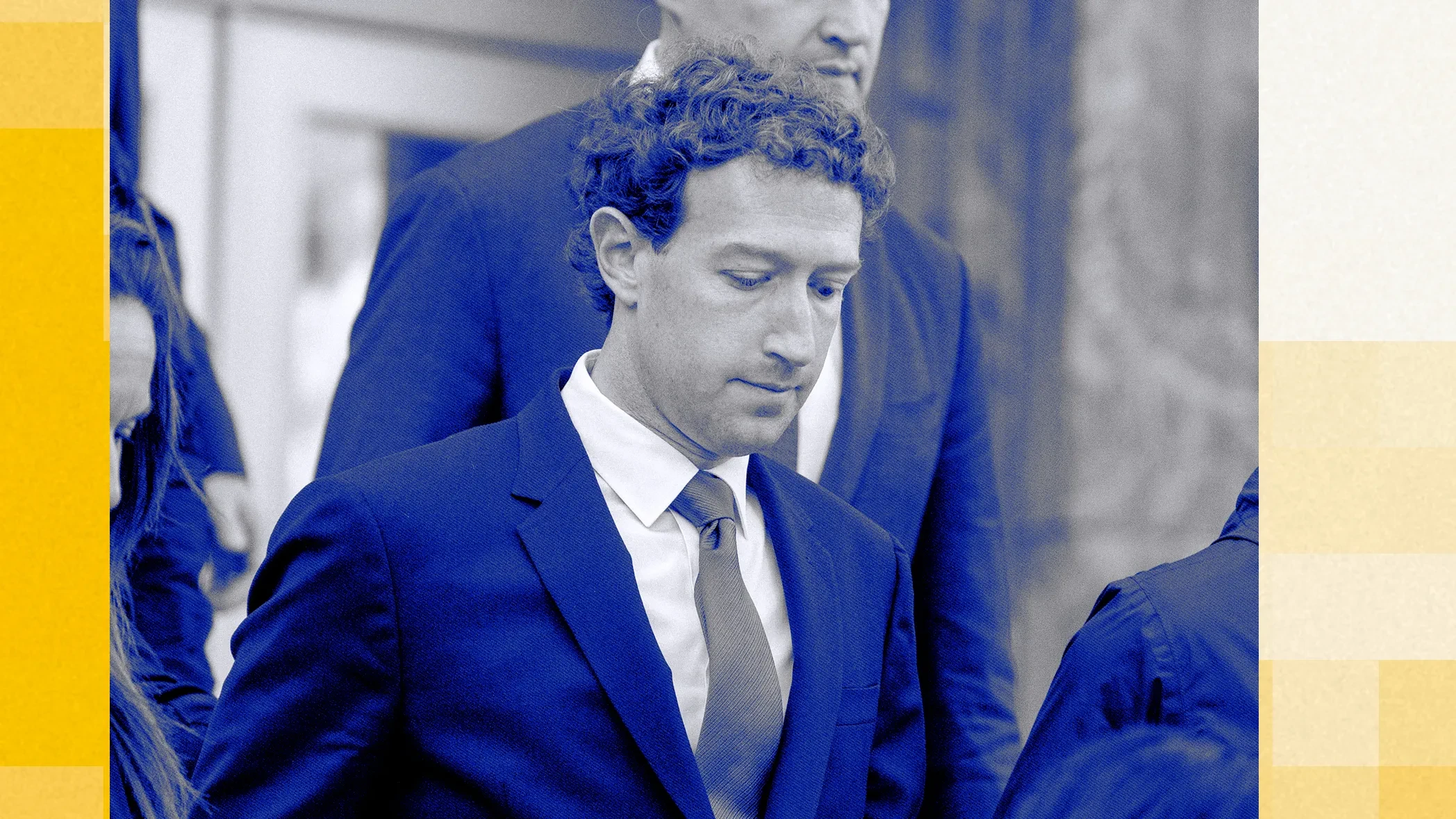
This week, my colleague Paresh Dave and I each spent a full day inside a federal courthouse in Oakland, California, observing the newest chapter of Meta’s ongoing child safety legal battle.
If you missed the earlier developments this year: Back in spring, Meta (alongside YouTube) lost a landmark California social media lawsuit, where a jury ruled the companies were liable for harm inflicted on a young user by intentional design choices built into their apps. Just earlier this month, a New Mexico court ordered Meta to pay more than $940 million in penalties, after finding the company created a public nuisance and caused widespread psychological harm to children. Now, Meta is mounting its defense in a new federal civil trial held at the U.S. District Court for the Northern District of California.
Leading the case against Meta are 29 state attorneys general. They argue Meta violated COPPA — the federal privacy law designed to protect children online — by wrongfully collecting personal data from kids under 13 without prior parental consent. The lead attorneys general from four states (California, Colorado, Kentucky, and New Jersey) further allege Meta made deceptive claims about its platform that intentionally misled consumers. This trial centers specifically on two of Meta’s core products: Facebook and Instagram.
Meta pushes back against all allegations. The company insists it has fully met COPPA requirements in the states involved, denies any of its public descriptions of its apps were deceptive, and claims it is shielded from liability under Section 230 of the 1996 Communications Decency Act — the law that broadly holds online platforms are not responsible for third-party content posted by users.
I was in the packed courtroom on Tuesday for both sides’ opening arguments, presided over by Chief District Judge Yvonne Gonzalez Rogers. True to form, Meta was represented by a large team of high-powered, well-compensated lawyers — who, ironically, struggled with repeated technical issues with their courtroom microphones.
Megan O’Neill, Deputy Attorney General for the California Department of Justice, delivered the plaintiffs’ opening statement first, laying out the state AGs’ core argument: Meta intentionally designed its platforms to hook kids and harvest their personal data. O’Neill told the jury that over the course of the trial, they would see firsthand “how many features work both individually and together to keep people in the apps. To draw them in and keep them in for longer. Meta has used these features to draw kids onto the apps, and to keep them coming back.”
Meta’s lead counsel Paul Schmidt followed, outlining the dozens of safety features the company has built into its apps over the past several years, emphasizing that Meta is committed to continuing to improve its platforms. He also deflected some responsibility to users, noting there is no disagreement that some underage kids create accounts on Meta’s apps, and that some teens “struggle to manage their time” on social media. Inevitably, he added, some users will post negative content on any social platform.
Later that Tuesday and again on Wednesday, the court heard testimony from Arturo Bejar, a former Meta employee and a key witness in previous Meta legal cases. His core claim was blunt: Mark Zuckerberg never made youth safety a company priority. During his time at Meta, Bejar testified, the company culture rewarded any idea that could drive growth: if you even had a rough concept for a feature that would boost usage, “you could just test it,” he said. By contrast, he described a workplace culture where it was “near impossible” to pre-screen new products and features for potential harm to users. (The trial was paused on Thursday after one juror fell ill.)
Over the past decade, Meta has been tangled in an extraordinary number of public scandals — most of which have faded from public attention, written off as just the cost of doing big tech business, or resolved quietly out of court. Meta’s platforms have been linked to fueling violent unrest around the world and swinging election outcomes. The company has repeatedly collected user personal data through intentionally opaque practices. Not to mention the widespread internal dysfunction and toxic culture that has been exposed in depositions, insider books, and investigative reporting.
Through it all, Meta’s powerful underlying technology — the artificial intelligence that powers its apps — has done its job too well: keeping users hooked. The company has built its multi-billion dollar business model around keeping users scrolling, serving them eerily accurate targeted ads to drive revenue. No scandal has ever managed to drive users away from Meta’s platforms for good.
But this latest round of trials carries distinctly ominous signs for the company. So far, Meta’s aggressive legal strategy has not paid off. Other major social media companies including Snap, TikTok, and YouTube have opted to settle lawsuits alleging their platforms harm kids’ mental health this year. Meta, by contrast, chose to fight these claims in open court — and has already suffered very public losses, resulting in massive fines.
The stakes of this current trial extend far beyond the billions of dollars on the line (the state AGs are seeking as much as $200 billion in damages). Meta could be forced to overhaul core features of its platforms that are central to its growth model. Those changes could include stricter age verification to block underage users, and stricter enforcement of existing safety features for younger users such as mandatory screen time limits. Meta could also be compelled to remove “like” counts and disable infinite scroll for minor users, and require more public transparency into how its algorithm curates user feeds.
After reporting from the courthouse on Wednesday, my colleague Paresh shared his read on the jury: while many jurors told the court they barely use Facebook for anything other than buying and selling on Marketplace — which is extremely relatable — “they do use Instagram, and many have concerns about their own use or their children’s.” At the same time, Paresh sensed that jurors want and expect “parents to have a role in oversight, and not just quickly blame everything on the company.”
“So there’s something about this trial that could really represent the voice of the zeitgeist around social media usage,” Paresh told me. We both agreed that it’s unlikely any single scandal will drive masses of existing users to quit Instagram cold turkey. But if the court rules in the AGs’ favor based on the evidence presented, Meta could be held accountable not just for the content hosted on its platforms, but for how that content is delivered to young, impressionable users.
The ruling could force incremental changes to Meta’s long-held “growth at all costs” ethos, and the algorithmic design that prioritizes endless engagement above all else. And in turn, it could change outcomes for a generation of digital-native kids, who might not grow up just as hooked on Meta’s apps as previous generations. Maybe.
Paresh Dave contributed reporting to this story. This is an edition of Steven Levy’s Backchannel newsletter. Read previous editions here.
Meta’s Big Reckoning Is Here