Silicon Valley Still Doesn’t Understand Why People Hate AI
Silicon Valley is scrambling to unpack the rising wave of public pushback against artificial intelligence, and so far, its efforts have fallen sharply short. The unpalatable reality many in the industry refuse to fully grapple with is that a large share of the global population holds little optimism for the AI that tech leaders are rushing to build.
Recent attempts by top CEOs — from Meta’s Mark Zuckerberg to Anthropic’s Dario Amodei — to pin down the root of public frustration make clear that none of them correctly grasp what’s actually driving widespread societal distrust and dislike of AI. Meanwhile, mainstream popular culture has already figured out how to profit from this widespread anti-AI sentiment.
Take the new collaborative ad from beverage brands Liquid Death and Garage Beer, for example. The pair teamed up with Jason Kelce, former Philadelphia Eagles star and Taylor Swift’s brother-in-law, who launched a stunt calling on people to urinate in bottles and mail them directly to AI data centers. Speaking to Marketing Dive, Liquid Death’s head of creative summed up the stunt’s cross-partisan appeal, noting that backlash against sprawling AI data centers is “literally the one thing that unites all Americans right now.”
That broad frustration tracks with new public opinion data. A Pew Research Center survey released earlier this week found that more than half of Americans under 30 report feeling more concerned than excited about AI — a share that has jumped 24 percentage points over the past five years. Across all age groups, more than 70% of respondents agree that AI will lead to widespread net job loss.
But other recent polling shows public anxiety runs far deeper than just fears over employment or the boom in new data center construction. Americans also worry AI will erode young people’s ability to build genuine, meaningful relationships, believe tech firms should be legally required to compensate creators whose work was scraped without consent to train AI models, and fear the technology will damage students’ critical thinking capacities.
The tech industry as a whole often dismisses AI backlash as just a communications and branding problem — but the issue is far more fundamental than that. A recent study from the Searchlight Institute found that adjusting public messaging around AI barely moves the needle on how people view the technology’s overall impact on society.
While Silicon Valley has finally begun to acknowledge growing negative public sentiment toward AI, many investors and executives I speak with are increasingly alarmed that the industry still fails to understand just how much this backlash could threaten widespread adoption of AI products.
Earlier this month, Zuckerberg published a 6,500-word essay laying out his unbridled optimistic vision for AI’s future. The Meta CEO described a world where every person has access to a customized personal AI assistant that knows them deeply (built, of course, on the mountain of personal data Meta’s apps have collected over decades) to help with everything from career moves to hobbies to even raising kids. Though this product does not yet exist, Zuckerberg’s core argument is that opening up unfettered access to cutting-edge AI for everyone is the best possible outcome for the technology.
I share the view that AI will continue to improve and become more useful for everyday people, but I am skeptical that incremental improvements alone will shift entrenched negative public opinion. For people to even consider using the kind of personalized AI Zuckerberg imagines, they first need to trust the companies building it — and current polling makes clear the AI industry has not yet earned that trust.
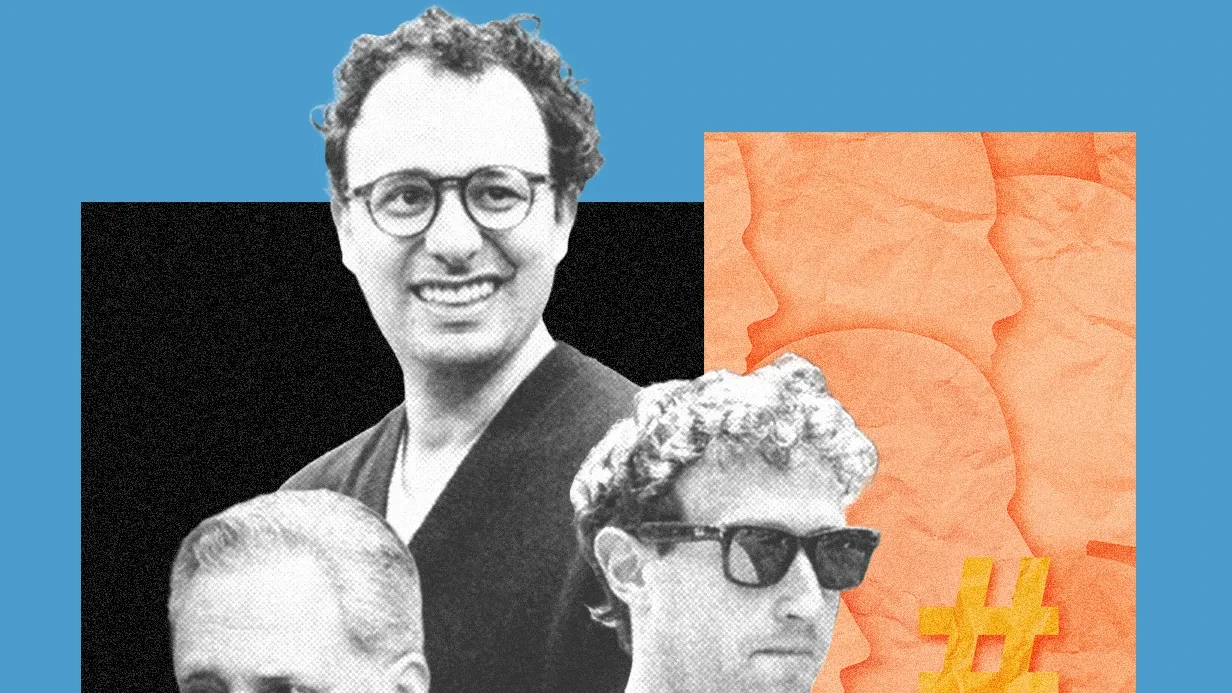
In his essay, Zuckerberg also took a thinly veiled shot at Amodei, noting he was surprised that “discourse from many developing AI is so filled with doom.” Tech investor Gavin Baker doubled down on Zuckerberg’s criticism on social media and during an appearance on the All-In podcast, going so far as to write that “Dario’s messaging has been massively helpful to efforts to ban data centers here in America.” White House AI adviser and All-In co-host David Sacks added his own agreement, claiming that Anthropic’s “narratives have done more than anything to shape public fear.”
The criticism pushed Amodei to issue a rare public response, with a lengthy social media post pushing back against the idea that his cautious messaging caused the AI backlash. “I think it is fundamentally a crisis of trust,” Amodei wrote. “I think that ordinary people don’t trust companies, governments, or the tech industry and always suspect that we are cooking up some new way to screw them over. The causes of this go back decades and AI is just the latest iteration of it.”
That core observation lines up far closer to reality than Zuckerberg’s take, but Amodei loses the thread later in his post. He went on to argue that “the most accurate criticism of AI companies including Anthropic is that we haven’t yet delivered on our big promises to benefit the world,” pointing to the long-touted promise of AI helping find a cure for cancer as one example of an unmet big goal.
Here, Amodei — and Silicon Valley as a whole — is missing the bigger picture. The current AI backlash is not caused by cautious doomsaying from tech CEOs, nor is it because OpenAI and Anthropic haven’t yet cured cancer. It stems from the very real changes AI is already bringing to society, changes that a large share of Americans believe are making the world worse.
Tech companies have poured massive resources into making new physical data centers more palatable to the public, touting commitments to responsible water use, clean energy, and local community investment. But for better or worse, mounting evidence shows that the nationwide data center buildout has simply become the visible, physical symbol of everything people hate about AI and the extractive way tech companies interact with local communities.
I speak regularly to rank-and-file AI company employees who see this backlash firsthand, hearing concerns from their own family members and friends across the country. But the leaders driving the current AI boom still seem wholly unprepared to address the full scope of how AI is already reshaping the world for the worse in many people’s eyes. If Silicon Valley wants the public to ever fully embrace the AI products it is building, it will need to start confronting these issues far more directly in the years ahead.
This is an installment of Model Behavior, Maxwell Zeff’s newsletter. Find previous editions here.
Silicon Valley Still Doesn’t Understand Why People Hate AI