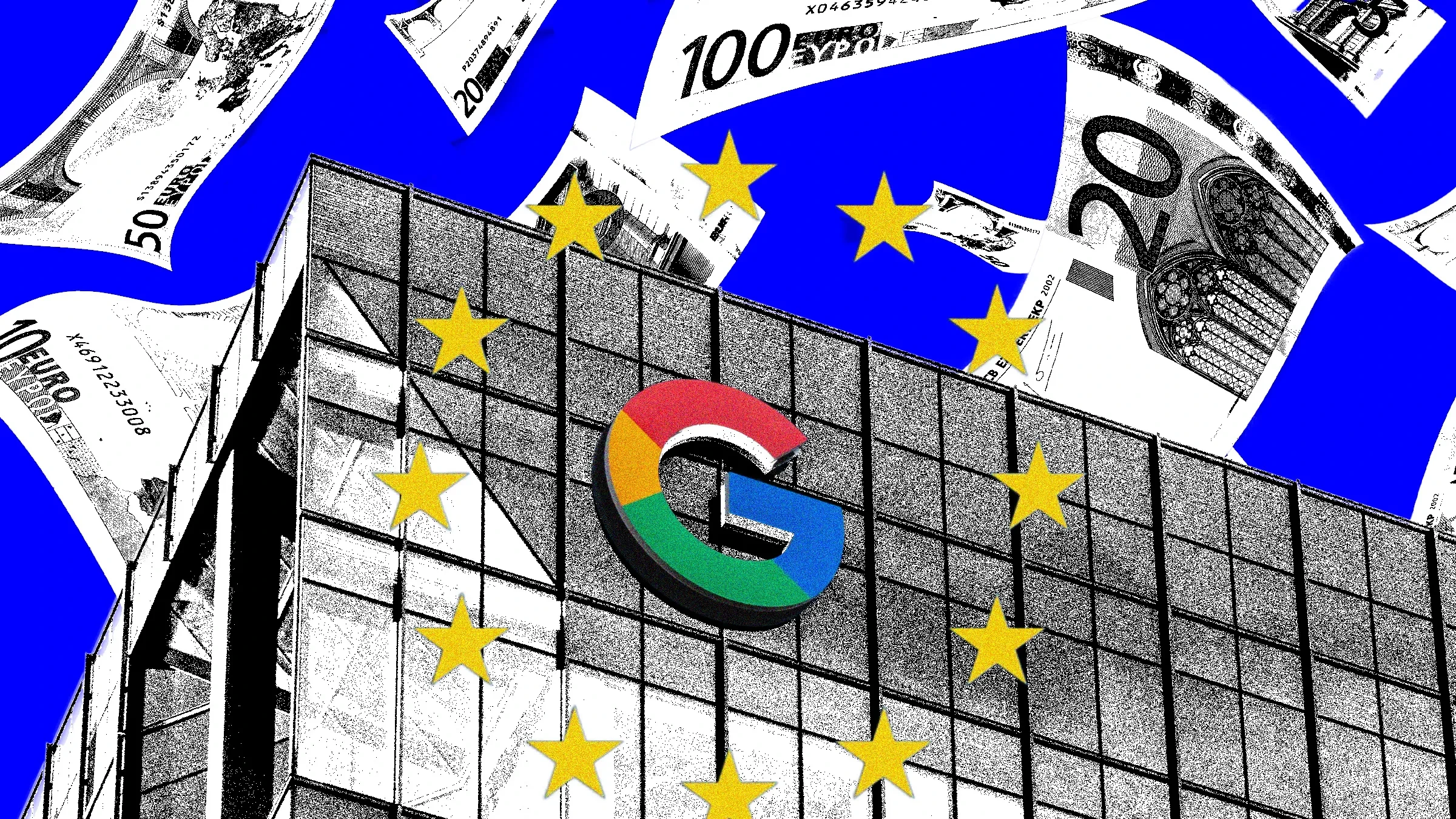
European Commission Hits Google With $1 Billion Antitrust Fine Over Digital Markets Act Violations
The European Commission (EC) has issued a $1 billion penalty against Google following a finding that the tech giant breached EU competition rules. An EC investigation concluded Google abused its dominant market position in the European Union’s search and app store sectors, steering users toward the company’s own apps and services at the expense of competitors—an explicit violation of the bloc’s Digital Markets Act (DMA).
Regulators have ordered Google to immediately stop giving preferential placement to its own offerings in search results, spanning categories including shopping, accommodation, transport, and flight booking. Google must also revise its Play Store policies to allow third-party app developers to market and process transactions directly with users outside the platform, where Google currently collects a commission on all sales.
“The best products should succeed because they are higher quality, not because they are owned by the company that runs the dominant search engine,” said Teresa Ribera, EC Executive Vice President. “European consumers have a right to hear from app developers about where they can access the best deals, even when that means the app store owner does not get a cut of the transaction.”
In a statement provided to WIRED, Google confirmed it is considering appealing the latest penalty. “This isn’t fair competition—it’s product degradation pushed by a small group of self-serving complainants, with European businesses and consumers left to take the hit,” said Kent Walker, Google’s President of Global Affairs.
Tech industry trade groups have argued that overly aggressive enforcement of the DMA is ultimately self-defeating. “Reducing the quality of services that Europeans can access is not a positive outcome,” Daniel Friedlaender, Senior Vice President of trade body CCIA Europe, told WIRED.
This penalty is the latest in a series of massive antitrust fines the EU has leveled against Google over the past decade, covering a wide range of anti-competitive violations. In early July, a European court upheld a record $4.1 billion fine first issued against Google in 2018, stemming from mandatory contracts that required smartphone manufacturers to pre-install Google Search and the Google Chrome browser on new devices.
“Certainly, the stakes are extremely high for companies here. How a business ranks in search results impacts its success dramatically,” said Kathryn McMahon, Associate Professor of Law at the University of Warwick. “Under EU competition law, firms in dominant positions like Google have a special responsibility not to distort fair competition.”
To resolve the latest investigation, Google has put forward proposed changes to how it manages the Play Store and ranks its own products in search results. The EC has characterized these revisions as “progress towards compliance” with DMA requirements.
Recently, U.S. President Donald Trump vowed to impose steep new tariffs on European countries that move to restrict American tech companies. The White House has not responded to a request for comment on the new Google fine.
McMahon notes the latest penalty is “quite a strong response, in the context of transatlantic disputes and Trump’s threat to leverage fines through trade action. It shows the commission is willing to be tough even amid external pressure.”
European Commission Hits Google With $1 Billion Antitrust Fine Over Digital Markets Act Violations