How AI-Generated Content Is Eroding Trust in the Internet’s Most Beloved Animal Content
Artificial intelligence-generated photos and videos have gutted one of the internet’s largest, longest-running sources of joy and compassion: authentic animal content. From viral clips of sailors rescuing stranded polar bears, to heartwrenching posts of baby calves separated from their mothers, to miracle stories of recovered lost pets, millions of people can no longer take the animal content they scroll through at face value.
The tidal wave of deepfakes and low-quality AI "slop" that has flooded social platforms over the past few years has sparked widespread frustration among everyday viewers, original animal content creators, and animal welfare organizations alike. Now, every audience member and group is forced to comb through pixels to hunt for warped glitches or other telltale signs that a piece of content was artificially generated.
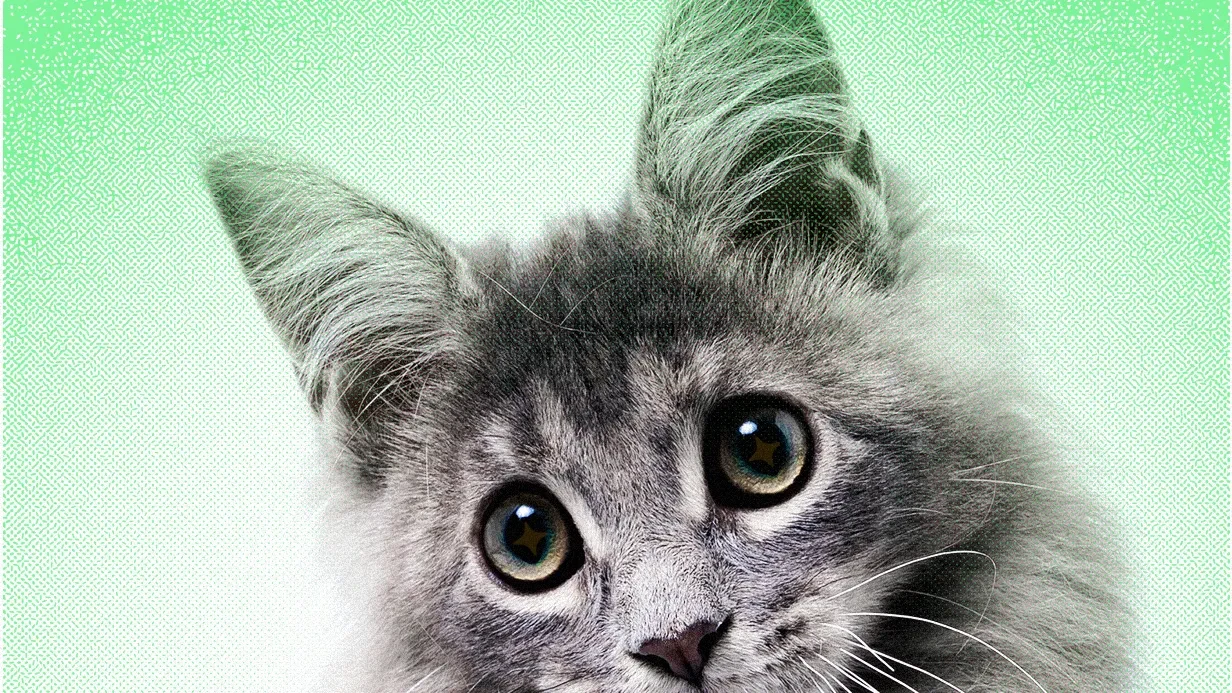
In April, Mibbby Butler experienced this harm firsthand when she received a text claiming her missing cat Brooklyn had been located. The day before, her roommate’s boyfriend had accidentally taken Brooklyn and left him stranded 30 minutes away from their home in the Los Angeles suburbs. Butler quickly posted a missing cat poster across social media, and was already driving around the area with her roommate searching for Brooklyn when a stranger sent her a photo of the cat. In the image, Brooklyn sat on a kitchen counter, cuddled by a young woman. “My baby is OK!” Butler exclaimed excitedly to her roommate.
But the stranger demanded an upfront payment for what he called Brooklyn’s temporary care before he would return the cat. That’s when Butler’s suspicion kicked in, and she looked closer at the photo. She noticed Brooklyn was posing exactly the same way he had in the photo she used for her missing poster. Both images showed a Torani syrup bottle and microwave in the background, but in the new fake photo, the label text on the bottle was garbled—a classic red flag of AI generation. Disheartened, Butler refused to pay. “I didn’t know people scammed people using lost pets,” she says, adding that she chose not to report the incident to police because she was unsure a crime had actually occurred. Four months later, Brooklyn is still missing.
The flood of fake AI content has made life just as difficult for creators of authentic animal content. Nonprofit organization We Animals publishes work from 175 photojournalists who document animal abuse and exploitation at farms, circuses, and scientific research labs. Eva von Jagow, the group’s marketing manager, says the shocking nature of their work naturally invites audience skepticism. For example, drone footage the group shared of rows of calf hutches at an Arizona dairy farm—where calves are separated from their mothers shortly after birth—looks almost too perfectly composed to be real. In the past, people have already claimed the group’s work is staged or edited with Photoshop. It is little surprise, then, that some viewers now accuse the entire organization of relying on AI, even though We Animals strictly bans all partnered photographers from using generative AI. “How to prove it's not AI?” one Instagram user commented on the dairy farm drone video earlier this month.
To convince audiences their content is authentic, We Animals expects it will have to start sharing behind-the-scenes clips of shoots and more detailed disclosures about the steps staff take to verify every submission. The group also plans to adopt technology that embeds data about a file’s origin and editing history directly into the digital file of each photo and video. Victoria de Martigny, We Animals’ director of visual content, says preserving audience trust is critical. If trust erodes, it could “open up the door to people questioning all of the work,” she says, and “we don’t ever want to be in that position.”
Real, emotionally evocative animal imagery has long been a core tool for conservation and welfare projects to pull at public heartstrings and attract critical donations. But for operators of accounts that churn out AI content, synthetic animal imagery is a low-effort path to racking up likes and earning ad revenue. Because fakes are far cheaper and faster to produce than authentic content, they are already crowding out real animal clips in social feeds and search results, says Oscar Horta, a philosopher and leading animal activist who recently co-directed a short film on AI’s impact on wildlife.
Horta says he is alarmed by the far-fetched animal rescue videos he has seen online lately, such as clips of wild animals being rescued during wildfires and floods. He worries that this likely AI-generated content will leave people more likely to question legitimate rescue tactics and make it harder to fundraise for real rescue work in the future. That outcome is particularly dangerous at a time when extreme weather events that threaten animals are becoming more common. Inauthentic content can also inspire people to take dangerous actions that end up harming animals, Horta adds. “There are deepfakes of polar bears drowning and people on boats coming and rescuing them,” he says, calling the manufactured scenes “ridiculous” and “unrepresentative of what it means to help animals.”
Researchers and policymakers have begun proposing ways to slow the creation and spread of AI-generated misinformation about animals. This month, Jeff Sebo, director of New York University’s Center for Mind, Ethics, and Policy, began pushing AI developers to add language to their model guidelines that discourages the creation of content that could harm animals. The framework is designed to “emphasize the importance of staying grounded in evidence and reason” when it comes to the potential suffering of individual animals, Sebo says, while also avoiding being “overly preachy, overly moralizing, or refusing reasonable user requests.”
New laws in California and the EU already require major AI image generators to embed invisible tags that mark content as AI-generated. Social media platforms are then required to use those tags to add a public label to all AI-created photos and videos. Greater public awareness of AI red flags and wider access to verification tools could also help rebuild trust. Tools built into ChatGPT, Gemini, and Meta AI can already identify if an image was generated by that specific platform. But most people do not have time to upload every animal photo or video they see to these tools for checking, and the tools have significant limitations, including caps on how many images a user can verify. Integrating verification tools directly into messaging apps and web browsers, and turning them on by default (with strong privacy protections in place, of course) would make these tools far more useful for everyday users. For Butler, that kind of built-in protection could have spared her the heartbreak of the cat scam: her phone could have automatically warned her the scammer’s photo was likely fake.
Even now, about once a month, Butler receives another deepfake from a new scammer claiming to have found Brooklyn. When WIRED tested one of the images Butler received, ChatGPT confirmed it had generated the image, which shows a cat matching Brooklyn’s description eating in front of a doorstep. Using the original photo of Brooklyn from Butler’s missing poster as a reference and a 29-word prompt, WIRED was able to generate an image nearly identical to the scammer’s fake via ChatGPT.
Butler says she now can barely scroll social media without running into AI-generated cat content. Every time she sees one, she blocks the account that posted it, but new AI accounts keep popping up. These days, she spends much of her time in a 300,000-member Facebook group for artists who oppose generative AI. For her, the group has become a new sanctuary: she can enjoy art she knows for certain was created by humans, while she waits and hopes Brooklyn will one day come home.
How AI-Generated Content Is Eroding Trust in the Internet’s Most Beloved Animal Content