Viral Interview With Christopher Nolan Catapults Chinese Public Intellectual Yiyang Zhuge to Global Attention
Last week, Yiyang Zhuge learned a surprising lesson about internet fame: when your content blows up globally, the academics you’ve followed for years will suddenly start following you back. When Zhuge logged into X, she found her new followers list was dotted with dozens of famous professors and scholars from across the world.
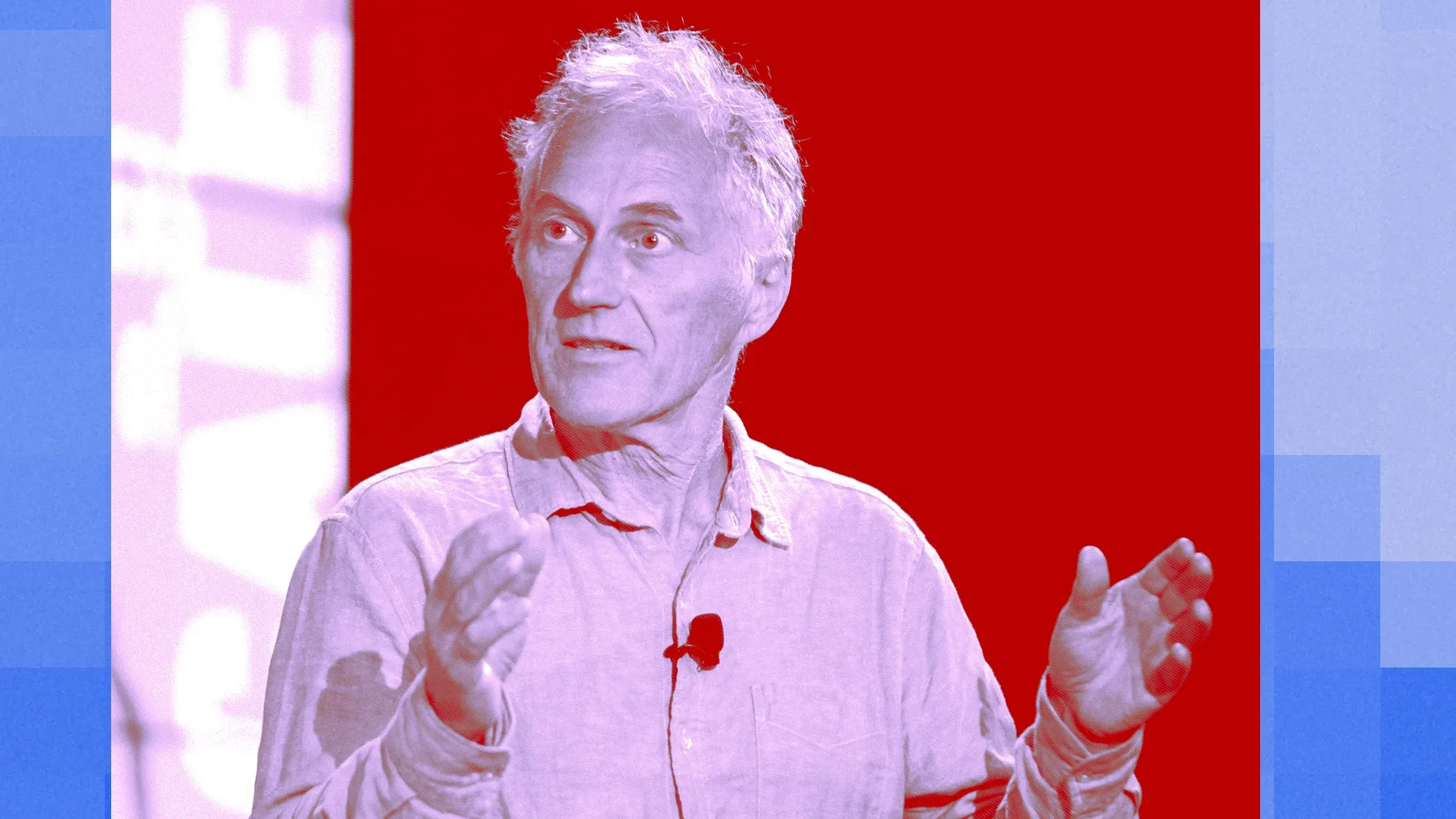
A PhD candidate in political philosophy at Boston College, Zhuge previously only lurked on X to stay up to date on the latest academic debates and industry gossip. The vast majority of her online work lives on Chinese internet platforms, where she uses the alias Zhong Shu and hosts a popular podcast with hundreds of thousands of loyal listeners. Now in her late 20s, Zhuge landed a career-making opportunity late last month: she interviewed Christopher Nolan, one of Hollywood’s most influential directors, who was in Beijing promoting his new film The Odyssey.
Rather than sticking to generic celebrity or Hollywood-focused questions, Zhuge posed a series of deeply philosophical queries to Nolan, covering the Christianization of Greek philosophy and how heroes are framed on screen. Her opening question left a lasting impression: “Are you a bard for a civilization at dusk?” Nolan was visibly struck by her line of questioning.
After the interview was published in China, Geoff Keighley — a prominent video game journalist and son of Nolan’s long-time friend David Keighley — shared the conversation to X, calling it “a great listen.” Keighley’s post has been viewed more than 18 million times, and when Zhuge shared the full interview to her own X account later, it racked up another 6.9 million views. For the first time, Zhuge became the center of conversation across the English-speaking internet, drawing equal parts praise, mockery, criticism, and defense.
Many commentators called it the best interview of Nolan’s The Odyssey press tour, while conservative outlet National Review dismissed it as a “CCP hostage video.” But across the political spectrum, nearly everyone asked the same question: who is this young Chinese woman with a bob haircut discussing the decline of civilizations?
While almost unknown to most Western audiences, Zhuge is already one of the most prominent young public intellectuals in China, and has interviewed many of the country’s leading cultural elites. She was featured in Vogue China as a standout example of successful 20-something womanhood, and shares yoga and fitness tips with her 360,000 followers on Chinese lifestyle platform Xiaohongshu.
In an interview this week, Zhuge traced her unexpected career path back to personal tragedy. “I went through an adulterous divorce where my ex-husband sued me, and I ended up with a massive amount of legal debt,” she says. “I felt discouraged by experiences tied to that tragedy in English-speaking academia, so I shifted my focus back to the Chinese-speaking world to build a career and pay off my debt.”
A deep dive into Zhuge’s work reveals staggering levels of productivity. Beyond publishing philosophy translations and writing articles for Chinese media outlets, she has recorded more than 360 episodes of her podcast Monologues of a Committed Observer in just three years — an average of one new episode every three days. Most episodes feature 30 minutes of seemingly unscripted monologue breaking down core political science concepts. On XiaoyuzhouFM, China’s top podcast platform, she counts more than 940,000 subscribers.
Despite her massive following, Zhuge says she has no interest in fame for fame’s sake. “I have no attachment to fame and no desire to preserve it for its own sake,” she told me. “What I want is enough freedom and time to build a life centered on thought. That life requires some money, but not very much.”
The Question That Sparked Global Conversation
When Zhuge asked Nolan if he saw himself as “a bard for a civilization at dusk,” she says she did not have any single civilization in mind. Instead, the question fits into a long philosophical tradition of questioning the collapse of value systems.
“I was not primarily attempting to issue a verdict on the contemporary United States,” she says, but “people are free to interpret the phrase through current debates about American or Western decline.”
That is exactly how most Western social media users interpreted the question. Across X, YouTube, and Reddit, commenters lamented that Western interviewers rarely ask guests such rigorous, substantive questions. Many wondered why a Chinese woman was the one asking deep philosophical questions about Greek thought, while others questioned whether Western institutions still teach humanities and classics to modern students.
To be fair, Zhuge was educated entirely in the Western academic system. She has studied in the U.S. since high school, has lectured at Boston College and Brandeis University, and has translated works by Hannah Arendt and ancient Greek philosopher Plutarch into Chinese. She lives in Boston for most of the year, and her academic work draws on Straussianism, an influential school of conservative political philosophy that has shaped the thinking of figures like Peter Thiel.
Her fame in China — which first earned her the opportunity to interview Nolan — stems largely from her ability to clearly and succinctly explain the American political system to Chinese audiences, though critics note her own conservative ideological leanings often appear in her work.
“She was trained in American conservatism, so the questions she asked really resonated with the U.S.’s educated public,” says Chenchen Zhang, an associate professor of international relations at Durham University. When the familiar insecurities of American conservatives came out of the mouth of a Chinese woman, audiences instantly assumed “this is how China views Western civilization,” Zhang explains.
The internet’s reaction to Zhuge’s interview echoes “Chinamaxxing,” a meme that spread across Instagram and TikTok in the first half of 2026. That trend was pushed mostly by left-leaning Gen Z Americans, who embraced overt support for China and Chinese culture to numb their anxiety about America’s decline. Today, right-leaning Americans are grappling with the same anxieties by fawning over Zhuge’s reverence for classical thought — two reactions that are two sides of the same coin.
Pushing Back Against Political Labeling
As the American right rushed to claim Zhuge as one of their own, the far left moved to distance itself from her. On X, prominent anonymous progressive account @zei_squirrel, which has 346,000 followers, labeled her either “a deranged fanatical neocon Zionist lunatic” or a Chinese state media psy-op, pointing to her choice of accounts she follows on X.
Zhuge says being targeted by people across the political spectrum is nothing new. “In China, I try very hard to remain above the fray of the mob rather than let public controversy determine what I think or discuss,” she says. “The labels may differ across countries, but the vulgar human impulse to sort people into political camps is universal.”
As for the claim that she is a Zionist, Zhuge posted one rebuttal on X but says she will not engage further. “An account that searches through someone’s following list for Jewish names is not conducting any meaningful analysis,” she says. “This mentality is one reason American online public life has become so polarized. People no longer examine arguments; they investigate affiliations.”
Still, this sudden burst of global virality has clearly shaken her. In her most recent podcast episode published Thursday, Zhuge shared that this was the first time she had truly become the subject of public discourse. Her tone carried a clear undercurrent of anger, which her audience noticed immediately: one listener pointed out that she forgot to deliver her usual signature sign-off. Instead, she closed the episode by playing Beethoven’s Symphony No. 3, the “Eroica,” which the composer dedicated to heroes.
“I would rather listen to how revolution collided with destiny in the ‘Eroica’ Symphony than a bunch of people in my notifications speculating who was my puppeteer pulling the strings,” she said.
This is an edition of Made in China, the newsletter by Zeyi Yang and Louise Matsakis. Read previous newsletters here.
Viral Interview With Christopher Nolan Catapults Chinese Public Intellectual Yiyang Zhuge to Global Attention