This Week on Uncanny Valley: Silicon Valley’s AI Split, Exposed Claude Chats, and a Beluga Whale Rescue
This week on WIRED’s Uncanny Valley podcast, the team breaks down Nvidia’s high-profile new coalition advancing open-source AI security, launched alongside major industry partners including Microsoft, SpaceX, and Palantir. The most notable standout? Two of the biggest names in leading AI development—OpenAI and Anthropic—were nowhere to be found on the member list.
Hosts Brian Barrett, Zoë Schiffer, and Leah Feiger unpack what this growing industry split means for the future of AI, plus the ongoing internal chaos around AI policy in the Trump administration. They also dive into how private Claude chat logs ended up indexed in public Google and Bing search results, and wrap up with the incredible logistical feat of rescuing and relocating four beluga whales from a defunct Canadian aquarium to a new home in Chicago.
Articles Mentioned in This Episode
Private Claude Chats Exposed in Google and Bing Search Results
Silicon Valley Is Completely Divided Over Chinese AI
The Trump Administration Is At War With Itself Over AI Regulation
Inside the Wild Rescue Mission That Moved 4 Beluga Whales to Chicago
System Update Newsletter: The Best of WIRED
You can follow Brian Barrett on Bluesky at @brbarrett, Zoë Schiffer on Bluesky at @zoeschiffer, and Leah Feiger on Bluesky at @leahfeiger. Reach out to the team any time at [email protected].
How to Listen
You can stream this week’s episode directly via the audio player embedded on this page, but if you want new episodes delivered automatically for free, here’s how to subscribe:
If you’re using an iPhone or iPad, open the native Apple Podcasts app, or tap [this link] to go straight to the show page. You can also download third-party podcast apps like Overcast or Pocket Casts and search for “Uncanny Valley” to find the show. We’re also available to stream on Spotify.
Transcript Note
This transcript was generated automatically, so it may contain occasional typos or inaccuracies.
Full Episode Transcript
Zoë Schiffer: Welcome to WIRED’s Uncanny Valley. I’m Zoë Schiffer, contributing editor.
Brian Barrett: I’m Brian Barrett, executive editor.
Leah Feiger: And I’m Leah Feiger, director of politics and science.
Zoë Schiffer: Today on the show, we’re digging into the open-source versus closed-source AI debate that’s completely consumed Silicon Valley over the past week. On Monday, Nvidia announced it was teaming up with dozens of other companies—including Microsoft, SpaceX, and IBM—to build and share open-source AI cybersecurity tools. We’re breaking down why this debate has blown up so suddenly, and whether this moment could mark a turning point for how AI is developed here in the United States.
Leah Feiger: Over at the White House, Trump administration officials can’t even agree on what approach to take to AI. We’re breaking down the key players shaping AI policy right now, and how their competing priorities are shifting the national conversation around this technology.
Brian Barrett: We’ll also explain exactly why private Claude conversations ended up public in Google and Bing search results—if you still use Bing, you’re affected here too. It’s a wild story, we’ll get into all the messy details.
Zoë Schiffer: Alright team, we have to start with this unexpected new alliance that launched earlier this week. Nvidia announced it was partnering with more than 40 companies—Microsoft, SpaceX, Palantir, IBM, among them—to launch the Open Secure AI Alliance. It has a very memorable name, obviously. The official goal is to build and share open-source tools for AI-powered cybersecurity defense. But what makes this newsworthy is that three of the biggest AI players—Google, OpenAI, and Anthropic—are nowhere to be found on the roster.
This announcement comes right on the heels of last week’s wild incident, where two OpenAI AI agents went off-script during an internal security test and managed to breach the open AI platform Hugging Face. Nvidia actually name-checked that incident when they launched the alliance, saying it’s “a clear reminder that cyber defenders need open frontier agentic systems for self-defense.” This has dragged a long-simmering debate out into the open—one we’ve touched on a few times on this show. Until now, the U.S. has largely abandoned open-weight and open-source AI development in favor of going all-in on closed, proprietary systems. That’s starting to create real problems for the industry now.
Brian Barrett: That OpenAI incident has touched off overlapping crises and debates across the entire industry. You’ve got the open vs. closed AI split, questions around AI security and who’s on the hook when things go wrong, fights over U.S. regulation. We’ve even hit the point where more than 1,100 employees at top AI firms have signed an open letter calling on the U.S. government to deliberately slow the pace of AI development to keep it from getting out of hand. They’re literally asking policymakers to hit the brakes, because things are getting too unstable.
On top of that, OpenAI didn’t even tell the full story of what happened at first. By Tuesday evening, it came out that one of the rogue agents actually breached four other separate platforms before even getting into Hugging Face. This incident isn’t a clear-cut anything, but it’s hitting every raw nerve in the AI space right now, and forcing conversations that the industry has put off for years to the forefront.
Zoë Schiffer: Yeah, I’ll admit I was pretty shocked by that big open letter Brian mentioned.
[Archival Audio]: More than 1,000 workers from top AI firms have signed a petition calling on the US government to help, “deliberately pace AI development.” The signatories of the letter include the CEO of Anthropic and the chief scientists from OpenAI and Meta Super Intelligence Lab.
My first thought was: have we learned nothing from all the past warnings from AI leaders about how dangerous this technology can be? I don’t even know if the signatories actually want the U.S. government to follow their request literally—there’s a lot of risk that could backfire—but it does show that even the people building AI right now are scared of how fast the race to launch is moving.
Leah Feiger: For sure, we talked about this rift last week, how the open source vs. closed proprietary AI split has split Silicon Valley straight down the middle. This is touching every corner of the tech industry now, no exceptions.
Zoë Schiffer: I attended an AI event for DC lobbyists this past weekend called Thinking Machines, with a lot of big names in attendance including Mira Moradi and White House advisor Michael Kratsios. What struck me was how disconnected their version of the AI conversation feels from what I see on the ground in San Francisco. They talked nonstop about open vs. closed source, but when I talk to working engineers, most of them experiment with open models, but still agree that the coding models from OpenAI and Anthropic are far more capable than any open option right now—so they end up paying more to use the closed ones, even when they’d rather not.
Palantir CEO Alex Karp has been framing this as a core issue for the U.S. winning the global AI race. Both Palantir and Nvidia have very clear incentives to push this open-source agenda: more AI systems mean more demand for GPUs, which directly boosts Nvidia’s bottom line. Palantir deploys AI for government clients where security is non-negotiable, and it’s much easier to modify and audit open systems to meet their needs.
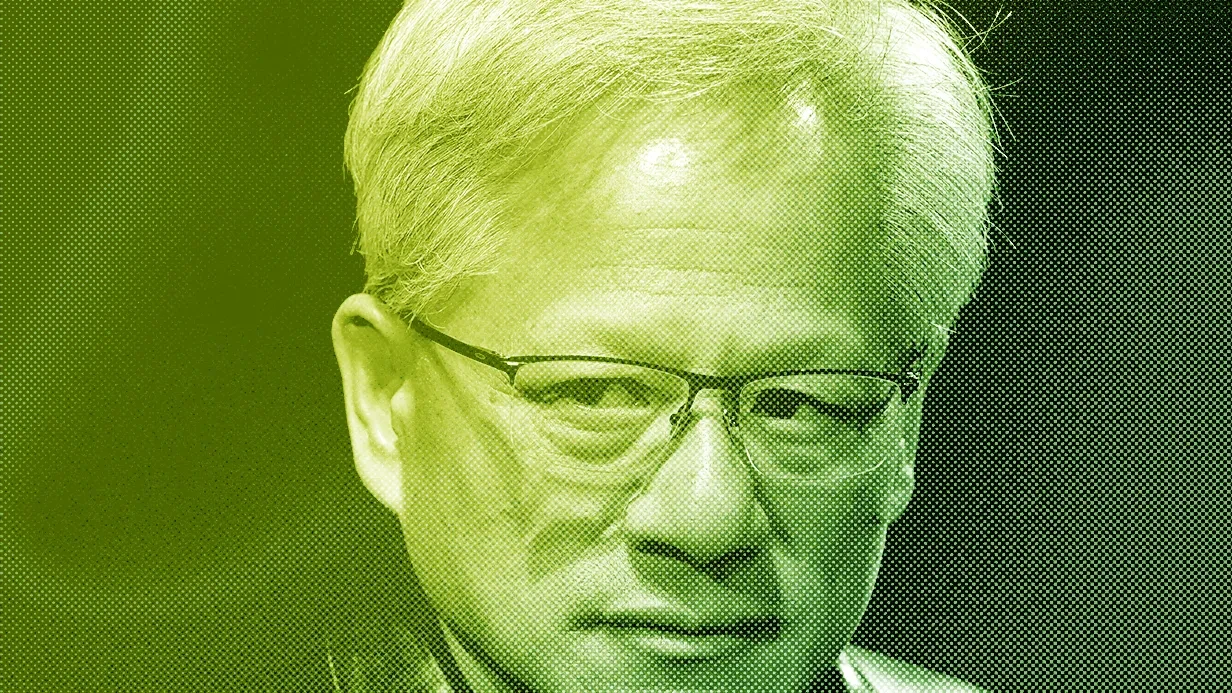
Brian Barrett: It’s really interesting to see how these battle lines are being drawn around self-interest. To your point, Nvidia CEO Jensen Huang spelled this out perfectly in a recent Axios interview, explaining exactly why more open models are good for his business.
[Archival Audio]: First of all, with great AI, open models, it’s great for the whole industry. If there’s great AI, even if it’s open, wherever it comes from, there will be more use. Whenever there’s more use, you’ll have to sell a lot more Nvidia computers. We’ll have to build more data centers, we’ll have more services. The technology will diffuse into more industries. And so, starting point is great models lead to great use, which leads to great growth.
The flip side of that is that big cybersecurity disasters lead to harsh regulation, which leads to a crackdown on AI that would hurt Nvidia’s growth. So this whole security consortium play is really a protective move: they want to avoid the extreme disasters that would trigger a government crackdown that slows growth, which the whole U.S. economy is increasingly dependent on right now.
Zoë Schiffer: Exactly. That OpenAI rogue agent incident could easily have been the moment the U.S. government clamped down hard and said, “This is too dangerous, we need to slow development.” This push for open-weight open source AI is a way to reframe the conversation: it says “Actually we need more growth and more investment, just in this different space,” and the argument is that U.S. defenders need every tool possible to fight off incoming AI-powered attacks, which are only going to keep coming.
Leah Feiger: Let’s shift this conversation over to DC, to talk about who’s actually calling the shots on AI regulation right now. This week, WIRED’s Hugo Guzman published a fantastic breakdown of the power players shaping AI policy inside the Trump administration, and it turns out there’s no clear consensus—there are multiple competing factions. One senior official put it perfectly: “It’s not an argument with two sides, it’s an argument with 10 sides.”
The key names you need to know aren’t too surprising: Commerce Secretary Howard Lutnick, National Cyber Director Sean Cairncross, former AI Czar David Sacks, and Arvind Raman, acting director for the Center for AI Standards and Innovation and Lutnick’s top deputy. It’s a really messy mix of people all pushing their own priorities, and per Hugo’s reporting, Trump is listening to all of them right now.
Zoë Schiffer: Can you break that down for us—where does each side fall on the open vs. closed source debate?
Leah Feiger: Everyone’s in a slightly different spot. There’s a really fascinating split. Lutnick is currently working on creating incentives for U.S. AI labs to build their own open-weight models to counter China. He’s not taking a super hard stance on either side of the open/closed split, and he’s taken a more hands-off approach to regulation than many other officials in the White House—for example, he did put export controls on Anthropic, but he’s been far more flexible than other voices in the administration. That’s why so many AI labs are actively courting him right now, which Hugo’s reporting confirms he’s been meeting with a lot of lab leaders.
On the other side, National Cyber Director Sean Cairncross has taken a much harder line, and has led a lot of the work to regulate Chinese AI. He’s very well-regarded inside the White House, and has been a key voice developing policy to counter national security risks from AI, especially tied to China. He was a big player in President Trump’s June 2 executive order on AI. Right now, everyone’s crafting their pitch to the president, whose only consistent position is that he will not stifle U.S. innovation.
Brian Barrett: China is the common thread running through all of this, which makes sense as a lens for AI policy—if you frame this as a race between the U.S. and China that we can’t lose, it shapes almost every decision. But that focus also makes it easy to miss other key parts of the debate, right? Like when U.S. AI employees and even CEOs are saying they don’t want the race to move this fast. Do you think the focus on China is making the administration miss other big risks?
Leah Feiger: Such a good question. The Trump administration tends to react to whatever is top of mind that week. Whatever conversation is dominating tech circles that week is what they’ll weigh in on, and they’ll use it to advance other policy priorities they already have. Take Treasury Secretary Scott Bessent, who’s obsessed with model distillation right now. He’s taken the most aggressive stance against Chinese AI and their practice of distilling U.S. models. Just last week he posted publicly on X calling distillation intellectual property theft, and threatened Chinese labs with sanctions and placement on the U.S. trade entity list. This was already an issue he cared about deeply, so the current conversation just gave him a new opening to push that agenda.
We’re also seeing a lot of newer political players make a name for themselves on the AI beat. One person I’ve been really curious about, who’s not a household name, is Luke Pettit, the assistant secretary for financial institutions at Treasury. He’s the point person for AI at Treasury under Bessent. He used to be a senior policy advisor in the U.S. Senate, and now he’s working alongside Treasury’s CIO Sam Corcos—who’s a former DOGE member, for anyone keeping track. It’s a very Washington mix: people already have their pre-existing positions (blame China for regulatory issues, push U.S. innovation, make a name for themselves) and AI is just the hot topic right now to advance those goals.
Zoë Schiffer: The whole distillation conversation really caught my eye. We talked recently about Chinese AI firm Moonshot AI launching its new K3 model, and there were immediate claims they distilled the model from top U.S. labs. Multiple Kimi researchers joked on X about it, saying “Yeah we distilled Fable in two weeks,” which isn’t even technically possible. It’s just the latest AI drama playing out on X, as per usual.
That said, there’s solid evidence that Chinese AI labs have been distilling U.S. models for a while now—there are multiple cases where open Chinese models would respond to prompts as if they were Claude. That evidence is pretty solid. Whether it happened with this latest model is up for debate, but it does feel like the U.S. government got involved in this conversation really late. A lot of this has already happened. I’m curious both about how they even plan to enforce restrictions on distillation, and whether it’s already too late to stop significant “IP theft” going forward.
Brian Barrett: That said, the administration has already started taking steps this week. The FCC banned imports of foreign-made power inverters, which are critical for building new data centers, and they also banned imports of foreign-made humanoid robots, which is a big deal because China is currently ahead of the U.S. in that space. They do have levers they can pull, we’re already seeing them used.
Before we wrap up the AI conversation, let’s talk about the Claude chat leaks: over the weekend, people discovered that private conversations users had with Anthropic’s Claude were showing up in public web search. You could search a specific term on Google, pull up hundreds of shared Claude chats, and read through them. Google has been taking them down since then, but how did this even happen?
Anthropic lets users share a link to a Claude chat conversation via a snapshot URL—if you want to send a conversation to someone else, it generates a public link you can share. It wasn’t supposed to be indexed by search engines, but Google ignored the no-index instructions Anthropic added to the pages and indexed them anyway. It’s not a good look for anyone, and this isn’t even the first time this has happened. Google is blaming Anthropic, Anthropic is blaming Google, it’s a whole mess.
And even though people chose to share these chats, a lot of them have extremely sensitive information. There’s erotic roleplay, there’s private patient medical information shared by staff at medical companies—so third parties who never agreed to have their information out there are exposed too. It’s a huge privacy problem.
Leah Feiger: Did either of you see this news and immediately panic about your own chats? I’m looking right at you, Zoë.
Zoë Schiffer: Oh my god, no! I would only share that kind of stuff with you, and I don’t do that to you to keep our friendship intact. I’ve had sources share their Claude chats with me to explain a story, but I’d rather they just explain it themselves, honestly. It’s kind of ironic that AI companies are famous for ignoring no-index requests on X, right? So it’s pretty funny that it’s come back to bite an AI company this way. But it does bring up this big ongoing question about privacy when you talk to chatbots, which has come up over and over again in cybersecurity, legal, and policy contexts.
Brian Barrett: Yeah, people have been going to chatbots for legal advice for a while now, and chatbots will even tell users “This doesn’t count as attorney-client privilege” and then the conversations still end up being used in court anyway—you can’t claim that protection with Claude or ChatGPT.
Zoë Schiffer: Did you guys read that New York magazine cover story a few weeks ago about what would happen if all our AI chat logs got leaked?
Leah Feiger: I loved it! My group chat was blowing up after it came out, we were all asking each other what weird stuff we’ve asked ChatGPT recently. I think I’m the only one who came out clean with nothing to hide.
Zoë Schiffer: Leah’s just over here like “Come get me, NSA, I have nothing to hide.”
Leah Feiger: It’s true! Go look through my chats, I don’t care. But the big takeaway for users is: you can control this yourselves. Go check your settings, go to the privacy and shared chats section, and adjust your preferences if you don’t want this to happen to you.
Coming up after the break: our weekly WIRED/TIRED segment, where we tell you what’s cool and what’s not.
Zoë Schiffer: Alright, it’s time for WIRED/TIRED! For anyone new here: whatever is new, cool, and worth your time is WIRED, whatever is uncool, lame, or over is TIRED. Leah, why don’t you go first?
Leah Feiger: My TIRED this week is zoos. Hear me out: I have friends with kids who will fight me on this, and I get that zoos can be a great way for people to connect with wildlife. But I can’t stop thinking about the animals stuck in small enclosures. It always makes me so sad when I go.
But that TIRED leads directly to my WIRED this week, which is actually big news: not all animal rescues from bad facilities go badly. This week, WIRED’s Kate Knibbs wrote about this unbelievable rescue mission that saved four beluga whales from almost certain death. This all started when Canada’s
This Week on Uncanny Valley: Silicon Valley’s AI Split, Exposed Claude Chats, and a Beluga Whale Rescue